OnlyFans has no discovery feed, so if you want to find creators you rely on outside sources. Reading ranked lists for value before you commit comes down to one habit: treat every card as a dated snapshot, not a verdict. BestOnlyFans and similar directories exist to fill a gap the platform itself leaves open, and the gap is the reason you should read them carefully rather than quickly.
A ranked list can point you toward a creator in a category you like at a price you can live with. It cannot tell you whether that creator will still post next month, or whether the page still looks the way the card describes. The skill is in knowing which parts of a listing carry weight and which parts are decoration.

Why These Lists Exist at All
There is no scrolling “explore” tab, no searchable index of creators by category, and no ranking algorithm pushed to new users. You arrive at a creator’s page because someone sent you a link, because you saw a mention somewhere, or because a third-party site gathered and compared pages for you.
They do the collecting, the categorising, and the comparing that the platform never built. Some are maintained carefully, with visible update dates and stated criteria. Others are scraped once and left to rot, which is why two sites can describe the same page in two very different ways.
It also explains why the same name appears across multiple lists with different positions. Each site picks its own inputs: price, posting frequency, category fit, sometimes follower counts, sometimes nothing measurable at all.

Which Columns Actually Matter
The useful ones change your decision. Rank price, freshness, and activity signals above everything else, because those three are the ones you can verify yourself in a couple of minutes.
Columns describing “vibe” or “style” without a definition are not measurable. They may still match your taste, but they tell you nothing about whether the page is active or what a month will cost. Read them last, if at all.
- Listed price — the base subscription figure, which on paid pages sits between $4.99 and $49.99.
- Last update timestamp — when the card itself was edited, not when the creator last posted.
- Category — useful for filtering, useless for judging quality.
- Activity signal — any note about posting frequency, which decays fast if not dated.
- PPV density indicator — whether pay-per-view messages are common, occasional, or absent.
| Column Type | Weight | Why |
|---|---|---|
| Listed price | High | It is the number you will actually be charged and the easiest to verify on the page itself. |
| Last update timestamp | High | It tells you whether anyone has checked the card recently or whether it is a leftover from months ago. |
| Category | Medium | Good for narrowing a long list, but it describes a label, not the current output. |
| Activity signal | Medium | Helpful when dated, misleading when the card does not say when it was measured. |
| PPV density | Medium | Changes your real monthly cost well beyond the base subscription figure. |
| “Vibe” or style descriptor | Low | Undefined terms do not help you compare two pages against each other. |

How BestOnlyFans Structures Its Rankings
Any ranking method worth reading states what it measures and when. BestOnlyFans organises entries around verifiable inputs: the listed subscription price, the visible category, an activity note, and a timestamp showing when the entry was last reviewed. Nothing in the method depends on data the reader cannot check independently.
That design choice matters more than the order of the list. When a ranking site publishes its criteria, you can disagree with the weighting and still use the data. When it publishes only a position, you have nothing to work with except trust.
Tip: before you act on any ranking, open the creator’s page in a second tab and confirm the price and category yourself. If the card and the page disagree, the page wins every time.
Reading Price History Instead of Price Snapshots
A single price reading tells you what a page costs today. A price history tells you how the creator treats pricing over time, which is a better predictor of what you will pay in three months. Sites that keep dated notes are far more useful than sites that show one frozen figure.
Promotional first months complicate this. A $3 first month is allowed even though the base price cannot sit below $4.99, so a low introductory number is not the same as a low permanent one. Check which figure the card is quoting before you compare it against another entry.
- Stable pricing — the same base figure across several months, which makes budgeting straightforward.
- Occasional promos — a discount month now and then, with the base price unchanged.
- Recent increases — a base price that moved upward, worth noting because auto-renew stops when a creator raises the price and existing access runs only until the paid period ends.
- Repeated swings — frequent changes in both directions, which makes any single reading unreliable.
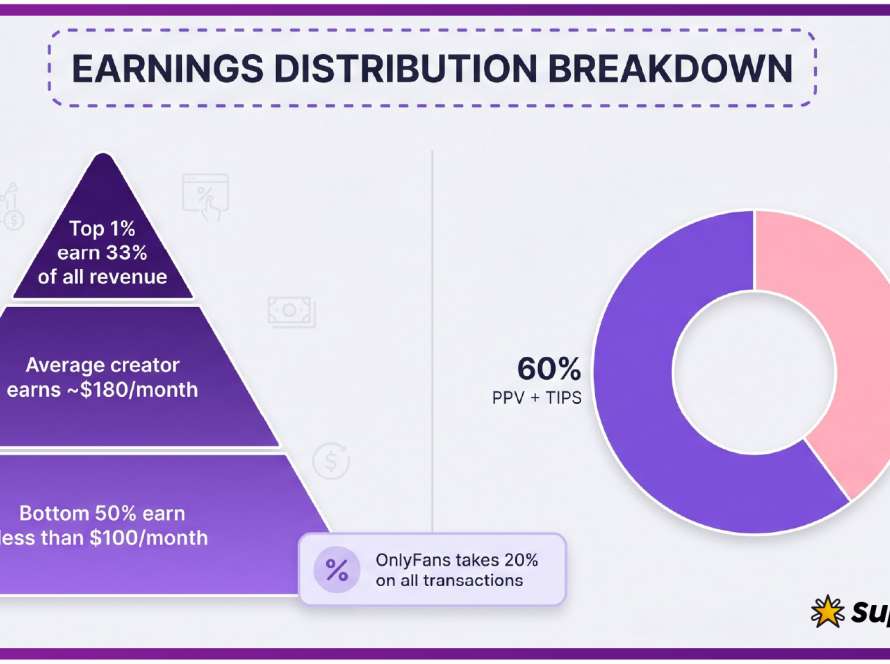
Remember the platform economics underneath the number. OnlyFans takes a 20% fee on everything and the creator keeps 80%, which is why creators lean on PPV messages and tips rather than base price alone. PPV unlocks can reach up to $50, and paid chat commonly runs $3 to $5 per message.

When Two Lists Disagree
Disagreement between ranking sites is normal, not a sign that one of them is lying. They collect at different times, weight different columns, and cover different slices of the platform. Your job is to work out which kind of disagreement you are looking at before you draw a conclusion.
Start with the simplest possibility: one card is simply newer than the other. Freshness resolves more conflicts than any other check, and it costs you nothing to look.
| Disagreement Type | Likely Cause | Subscriber Action |
|---|---|---|
| Different price | One card is older, or one is quoting a promotional first month instead of the base price. | Check the live page, then trust whichever card matches it. |
| Different rank, same data | Different weighting of activity, category, or PPV density. | Pick the site whose criteria you understand and stick with it. |
| Different category | Labels are assigned by hand and drift as a creator’s output changes. | Read the page description yourself and disregard both labels if neither fits. |
- Check both timestamps first and set aside the older card if the gap is large.
- Verify the disputed field against the creator’s actual page.
- Note which site updates more often, and weight that one higher going forward.
- Avoid drawing a strong conclusion from a single conflicting field.
One more caveat: a high rank is not a value guarantee. It reflects whatever the site chose to measure, on the day it measured it. Treat the position as a starting point for your own check.
Freshness and Timestamp Checks
Freshness is the cheapest quality signal available, and most readers skip it. A card without a date could have been written last week or two years ago, and there is no way to tell from the layout. Before you use any entry, find out when it was last touched.
- A card older than a month with no note of a recent review.
- No timestamp anywhere on the page, including the footer.
- Identical prices across every row in a long list, which usually means bulk generation rather than checking.
- A category that does not match what the creator’s page currently describes.

Decay rates differ by column. Price changes slowly and can survive a stale card for a while. Activity signals decay in weeks, because posting habits shift without anyone updating a directory. Category labels decay slowest of all, which is exactly why they are the least useful for a decision.
Turning a Ranked List Into a Shortlist
Convert the ranked list into a shortlist of three names, verify each one, and stop there. A list of thirty entries produces indecision; a verified shortlist of three produces a decision you can act on tonight.
- Filter by price band first — decide your ceiling before you look at names.
- Drop every entry with a stale or missing timestamp.
- Open each remaining page directly and confirm price, category, and activity.
- Note your top three and delete the rest from the tab.
- Apply your monthly cap, then subscribe to one and reassess at renewal.
Two practical notes on payment. A card verification hold of $0.10 is normal and refunded within days, so do not mistake it for a charge. And if you are comparing promotional offers, remember that a $3 first month is a promotion, while the base price for that same page still has to sit at $4.99 or above. A subscription you forgot about costs the same as one you chose deliberately, and only one of those was a decision.
If you publish or promote pages yourself, the same reading skill works in reverse. Understanding which columns directories weight helps you present your own page clearly, and pairing that with solid best hashtags for only fans gives outside readers a consistent trail back to you.
Security deserves a line of its own here. Phishing attempts that imitate subscription platforms are common, and the usual defence is boring and effective: use two-factor authentication on the account, never enter card details on a page reached from an unsolicited message, and check the domain before you log in.

FAQ
Why does OnlyFans not have its own search?
The platform was built around direct links and existing audiences rather than browsing. There is no discovery feed or directory, so third-party sites gathered that function instead. That is also why their coverage is uneven and their update habits vary so much from one site to the next.
Can I trust a ranking list completely?
Treat every entry as a dated snapshot of a page, then verify the fields that matter to you directly. A ranking is a pointer toward candidates, not a warranty about any of them.
What does a stale timestamp tell me?
It tells you the card may describe a page that has since changed price, category, or posting rhythm. Price tends to survive a stale card for a while, but activity notes do not. Verify before you subscribe rather than after.
How often do ranked lists change?
It varies widely. Actively maintained directories revise entries as pages change, while others update rarely or never. Check the timestamp on the card itself rather than assuming a schedule, and favour sites that date their edits visibly.