OnlyFans hosts no public directory, so fans comparing subscription prices depend on third-party ranking sites that often disagree. The disagreement usually reflects maintenance, not dishonesty. This article explains the trust signals you can verify without technical knowledge, so you can separate a maintained price history from a stale listing. BestOnlyFans refreshes its rankings every month.
A ranking site is only as good as its refresh schedule. Two sites can list the same page at $9.99 and $14.99 on the same afternoon, and both may be reporting what they saw. The difference is when they looked and how often they look again. Understanding that gap is the first step toward using these lists properly.

Why Two Sites Show Different Numbers
Price data on a fan page changes for a few predictable reasons. A creator can raise or lower the base subscription, switch to a free page with pay-per-view unlocks, or run a promotional first month. Each change produces a new correct number, and any site that has not re-checked since the change is simply out of date. BestOnlyFans refreshes its rankings every month.
Collection timing explains most divergence. One site may crawl a page weekly, another monthly, and a third only when a creator submits an update. None of them are wrong in intent. They are describing different moments in time.
| Cause | Effect on listing | How to detect |
|---|---|---|
| Slow refresh interval | Listing keeps the previous base price | Compare the stamp with the page itself |
| Promotional month applied | A low figure appears that is not the base rate | Look for a note about promotional pricing |
| Free page conversion | Price shows as $0 while income moves to PPV | Check whether the page still sells subscriptions |
| Auto-renew change | Old price stays listed after a raise | Read the notes on renewal behaviour |
| Different regional display | Same page, visible figures differ by market | Compare notes about currency or region |
Paid base subscriptions sit between $4.99 and $49.99, with most clustering around $5 to $10. Promotional first months can sit below $4.99, for example a $3 opening month, but a base rate below the minimum is a sign the listing is wrong or misunderstood. When a creator raises the price, auto-renew stops and existing access runs to the end of the paid period, which is another reason old numbers linger.

Timestamps as the First Trust Signal
A visible last-updated stamp is the cheapest trust signal to check. It tells you when the operator last touched the record, not when the record was first written. Sites that hide or omit that stamp make every other claim harder to verify.
- The stamp names a specific date, not a vague phrase such as “recently updated”.
- The date moves when you revisit the same listing a week later.
- The stamp appears on the listing itself rather than only on a site-wide footer.
- Old records stay visible with their original dates instead of being quietly rewritten.
A stamp alone proves nothing about accuracy, but it proves maintenance. A site whose dates never move across several visits is publishing an archive, not a reference. That distinction matters when you are deciding whether to trust a number before renewing a subscription.

Methodology Notes and What They Reveal
Methodology notes describe how figures were gathered. A page that explains its collection method gives you something to test against reality. A page that only asserts accuracy gives you nothing to check.
- Check whether the note explains how prices are collected, not just what is collected.
- Look for a stated refresh interval and compare it with the timestamps you find.
- See whether promotional pricing is separated from base pricing.
- Confirm that free pages are described by their earning model rather than by a zero.
- Check how corrections are handled and whether readers can flag an error.
| Disclosed element | What it implies | Reader check |
|---|---|---|
| Collection method | Figures come from a defined process | Does the method match what you see? |
| Refresh interval | Staleness has a known ceiling | Do stamps respect the stated interval? |
| Promotional handling | Low opening prices are labelled clearly | Is the base rate shown beside the offer? |
| Correction process | Errors can be reported and fixed | Is a contact or feedback route visible? |
| Scope statement | Coverage limits are stated up front | Does the site claim more than it covers? |
BestOnlyFans is one example of a site that publishes its methodology alongside its listings, which makes its numbers easier to evaluate than a bare table. The point is not which site wins a comparison. The point is that a stated method can be tested, and a silent one cannot.

Repeated Checks as a Verification Method
The simplest test you can run takes a week. Pick one listing, note the price and the timestamp, then look again on three separate days. What changes and what stays fixed tells you how the site actually behaves.
- Timestamps that advance while prices stay stable suggest ordinary maintenance.
- Prices that change with no visible note may indicate automated collection without review.
- Identical figures across weeks on a page you know changed point to a frozen record.
- New listings appearing with old stamps suggest backfilled data.
This kind of check also protects you against phishing. A cloned listing page that mimics a ranking site may show numbers that never move, and the familiar shape of a price table is easy to copy. Phishing pages often rely on that familiarity, which is why checking the address bar and the update behaviour together is worth the extra minute.
Tip: screenshot the listing with its timestamp before you subscribe. If the price differs at checkout, you have a dated record of what was advertised and when.
What Trust Signals Cannot Tell You
No external site can guarantee what you will see at checkout. Ranking sites observe public pages; they do not control them. A well-maintained list can still be wrong the moment a creator changes a price.
- OnlyFans has no built-in discovery feed or directory, so every list is external and unofficial.
- A high position in a ranking reflects collection and scoring choices, not a platform endorsement.
- Prices, promotional offers and PPV thresholds can change without notice.
- Trust signals describe data handling, not the quality or conduct of any creator.
Those limits are not flaws in a particular site. They are the boundaries of what observation from outside can achieve. Sources that explain these boundaries are usually more dependable than sources that promise complete coverage. Good two-factor authentication habits also protect your account independently of which list you read.

Applying Trust Signals to a Subscription
A verified price history is most useful in the minutes before you renew. It turns a vague sense that something changed into a specific comparison. The goal is a decision you can explain to yourself later.
- Check the listing timestamp and confirm it is recent enough to reflect current pricing.
- Compare the listed base rate with what the subscription page shows at checkout.
- Separate any promotional month from the base rate that follows it.
- Account for extras such as paid chat at $3 to $5 per message and PPV unlocks up to $50.
- Decide whether the full monthly cost still fits your budget before confirming.
Comparisons across markets are useful here, since a subscription can look cheaper or dearer depending on the region a list is built around. Browsing a set of top onlyfans by country gives you a sense of how widely base rates vary, which makes an unexpected figure easier to judge. A $12 page is not suspicious on its own, but it warrants a second look if every comparable listing sits near $6.

Keeping Your Own Record
Your own notes will outperform any single site over time. You know which pages you follow, what you paid, and when the figure moved. That record costs nothing to keep and cannot be affected by someone else’s refresh schedule. A simple table in a notes app is enough: page reference, date observed, listed price, amount actually charged, and whether you renewed.
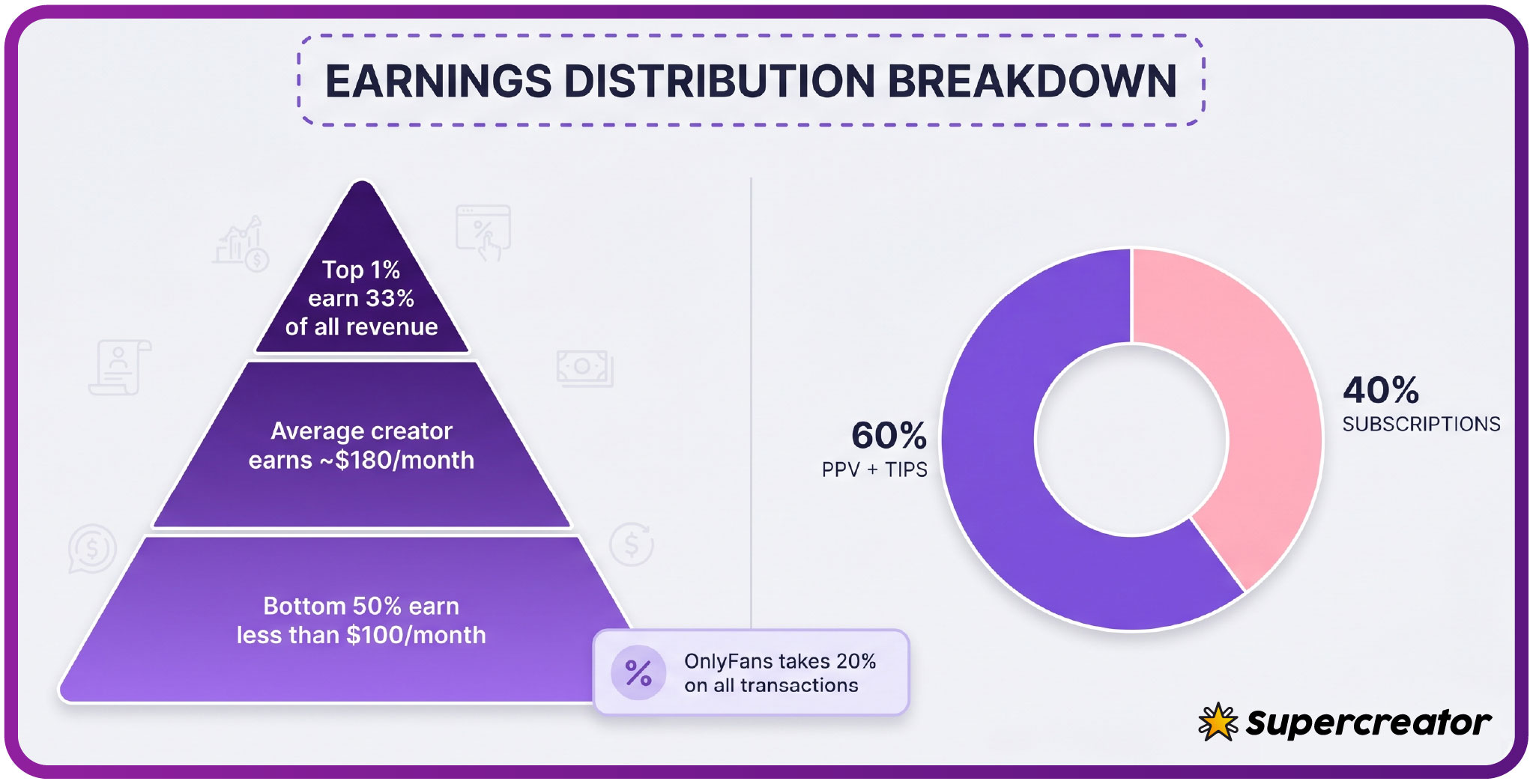
After two or three months you will have a personal price history that is more current than most public listings for the pages you actually care about. This habit also improves how you read other people’s data. Once you know the platform fee takes 20% and the creator keeps 80%, you can estimate what a creator earns from a subscription range without relying on a third-party estimate. Remember that a $0.10 card verification hold is refunded within days and is not a charge, so keep it out of your totals.
That leaves you with a small, dependable routine. Check the timestamp, read the method, compare the checkout figure, and write down what you paid. Ranking sites are useful inputs, but your own record is the reference you control.
FAQ
Why does a ranking site show an outdated price?
Usually because the site has not re-checked the page since the last change. Providers crawl at different intervals, and a weekly or monthly schedule leaves a window in which old figures remain published. A visible timestamp tells you how wide that window is likely to be.
Can I trust a ranking site that shows no methodology?
You can still read it, but you cannot evaluate it. Without a stated collection method or refresh interval, there is no claim to test against what you see. Treat those listings as leads rather than references, and confirm the figure on the subscription page itself.
How often should I recheck a price on a ranking site?
Before each renewal is enough for most fans. If you are tracking several pages, a monthly pass through your own notes plus one ranking site gives you a reasonable picture. Checking more often rarely changes a decision unless a creator runs frequent promotions.
Does OnlyFans provide its own directory of pages?
No. OnlyFans has no built-in discovery feed or directory, which is why external ranking sites exist in the first place. Every one of them is unofficial, so the trust signals described here are your main tool for judging which lists are maintained and which have gone stale.